Through the eyes and words of Bryan Hall, apprentice lineworker, Hillsboro, North Dakota
When I signed up for Light Up Navajo, I didn’t know exactly what to expect. A council member from Hillsboro had attended an MRES meeting, heard about the volunteer opportunity, and asked if I’d be interested. I said yes, and a few months later I found myself heading south to help bring electricity to homes across the Navajo Nation.
I’m originally from West Fargo, North Dakota, and now work for the City of Hillsboro, where I’m currently in my third year of apprenticeship training through the Minnesota Municipal Utilities Association (MMUA). While linework is my profession, Light Up Navajo offered something different — a chance to use those skills to make a direct impact on families still waiting for something many of us take for granted.
The work itself was familiar — framing poles, setting poles and connecting customers — but the setting was unlike anything I had experienced. The vast desert landscape, long travel distances, sandy terrain and rock formations made every day memorable. Just as memorable were the people. There was a strong sense of purpose among everyone.
I took these photos as I experienced Light Up Navajo.
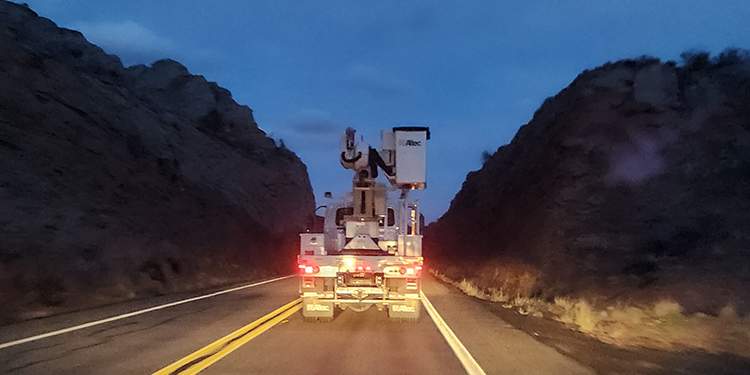
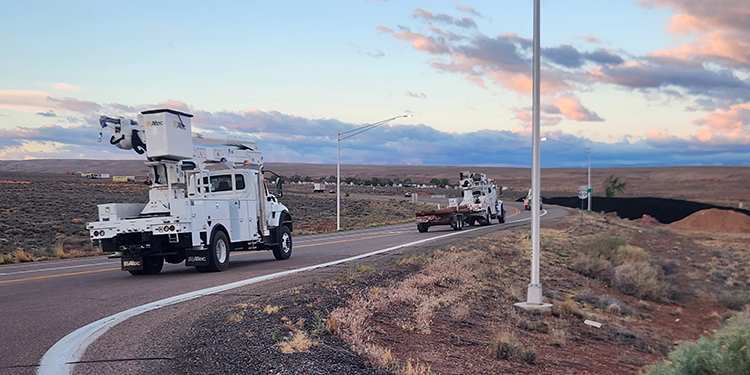
The days started early. We were usually on the road by 6 a.m. and ready to work by 7. In this photo, our convoy is heading into a canyon before sunrise on our second day. The roads were quiet, the air was cool and the desert was just beginning to wake up around us. Back home in North Dakota, I’m used to open prairie. Driving through canyons and rock formations on the way to a job site was something entirely different.
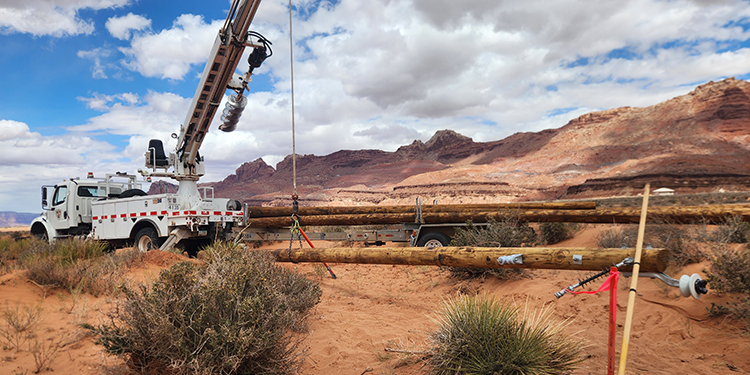
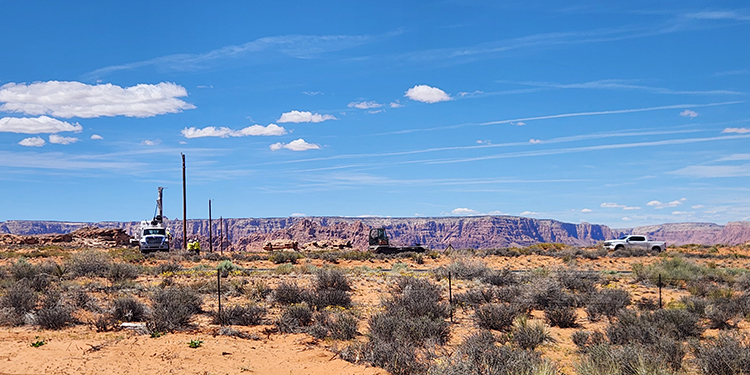
Here, a pole is being framed and prepared for installation. Every crossarm, insulator and hardware component must be installed correctly before the pole is set. The backdrop in this photo is almost hard to believe. We were working in some of the most impressive scenery I’ve ever seen.
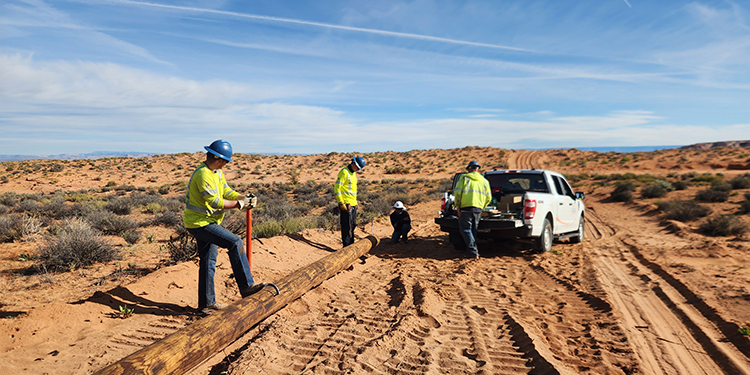
This photo shows our crew framing a pole before it was installed. Everyone had a role, and every step mattered. We spent much of the week framing and setting poles, preparing the infrastructure needed to bring power to new customers. The sandy terrain added a new challenge compared to the conditions I typically work in. Sand found its way into everything — our equipment, our clothes and even our lunches. Despite that, the work moved efficiently because everyone focused on doing their part.
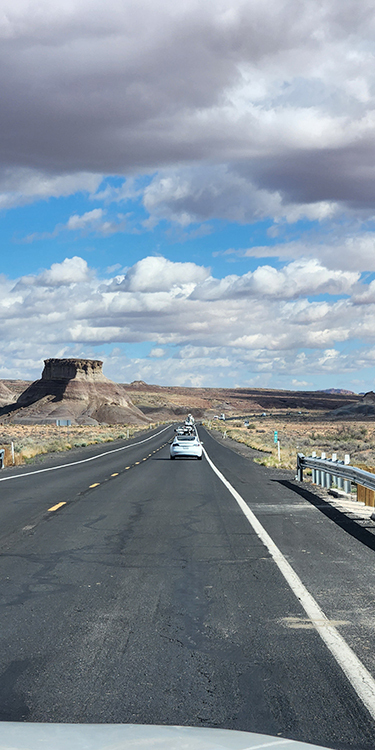
One thing that stood out during the week was the amount of travel involved. The distances between work locations could be significant, and some crews spent hours each day getting to and from their assignments. Being from the Midwest, I’m no stranger to long drives, but the scenery here was unlike anything at home. Every trip offered another view of mesas, cliffs and rock formations. These drives also highlighted how isolated some homes are. Seeing the distances firsthand helped me better understand the challenge of bringing power to customers scattered across such a large area.
After energizing our first customer, we loaded up and headed to the next location. During the first two days, much of our work focused on bringing service to individual homes. Each completed connection represented a family receiving electricity. What struck me most was how meaningful those moments were to the residents. For many of us, power is something we rarely think about until it goes out. Seeing firsthand what it means to families who have waited years for service gives you a completely different perspective on the importance of our work.
This photo was taken just before lunch as crews continued setting poles with the pressure digger. Most days followed a steady rhythm: build, set, move, repeat. The work was physically demanding, but one of the best parts of the week was getting to know people from different utilities and learning how they approached the same challenges. Despite coming from different places, everyone shared the same commitment.
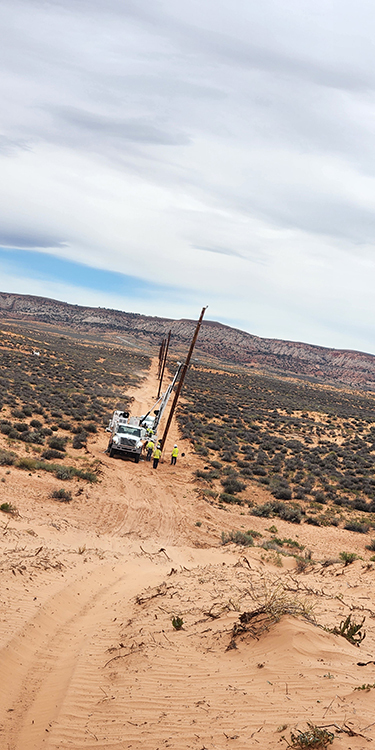
This view shows a section of line taking shape across the desert landscape. By this point in the day, multiple poles had already been installed and the project was beginning to look like a functioning distribution line rather than a construction site. Seeing the line stretch across the terrain was rewarding because it represented real progress. Every pole brought us one step closer to energizing another home. The terrain could be challenging, but moments like this reminded us why we were there.
At the end of each day, many of us gathered back at the hotel to talk about what we accomplished and share stories from the field. Those conversations became one of the most memorable parts of the trip. We came from different communities and utilities, but we were united by a common purpose.
The appreciation shown by the people of the Navajo Nation was incredible. At the community dinner, residents shared stories about receiving power and what it meant for their families. Hearing those stories put everything into perspective. Light Up Navajo is about improving lives. I’m grateful I had the opportunity to be part of it.
2026 Light Up Navajo initiative lineworkers
April 12-18
⊲ Scott Bortscheller, electric superintendent, Alton Municipal Utilities
⊲ Jim Reisz, utility superintendent, Woodbine Municipal Light & Power
⊲ Nick Rife, apprentice lineworker, Denison Municipal Utilities
⊲ Joe Poggensee, apprentice lineworker, Denison Municipal Utilities
⊲ Bryan Hall, apprentice lineworker, Hillsboro Municipal Utilities
⊲ Ryan Nelson, journey lineworker, Moorhead Public Service
⊲ Devan Schuler, journey lineworker, Moorhead Public Service
⊲ Tyler Kari, journey lineworker, Moorhead Public Service
April 19-25
⊲ Andy Niemann, journey lineworker, Watertown Municipal Utilities
⊲ Nathan Sime, journey lineworker, Watertown Municipal Utilities
⊲ Tyler Schmitz, journey lineworker, Detroit Lakes Public Utilities
⊲ Christian Petron, apprentice lineworker, Detroit Lakes Public Utilities